



HoneyCare® Dog and Puppy Training Pads

Spend $80, Get $5 Off! code:HC5
- Description
- Return & Exchange
- Leak-Proof Protection
- Suitable for All Dog Stages
- 6 Premium Inner Layers
- Super Absorbent Gel Core
- Versatile Training Use
You may request a return or exchange of unused, unopened HoneyCare pet diapers within 14 days of receipt by contactingservice@honeycarepet.com. Customers cover return shipping costs, and refunds are processed within 5-7 business days after inspection, Damaged or defective items reported within 7 days will be replaced or refunded at no extra cost.
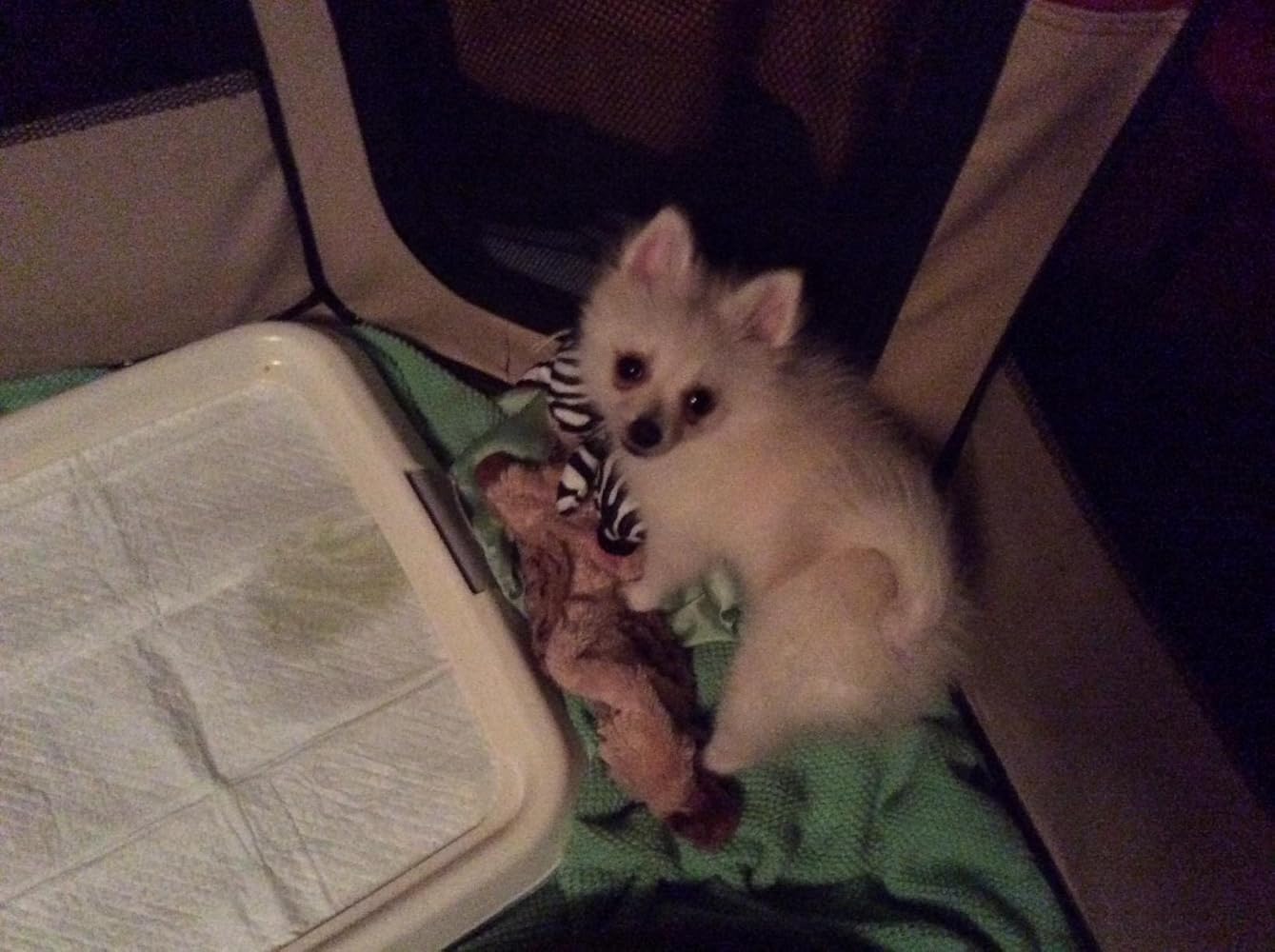


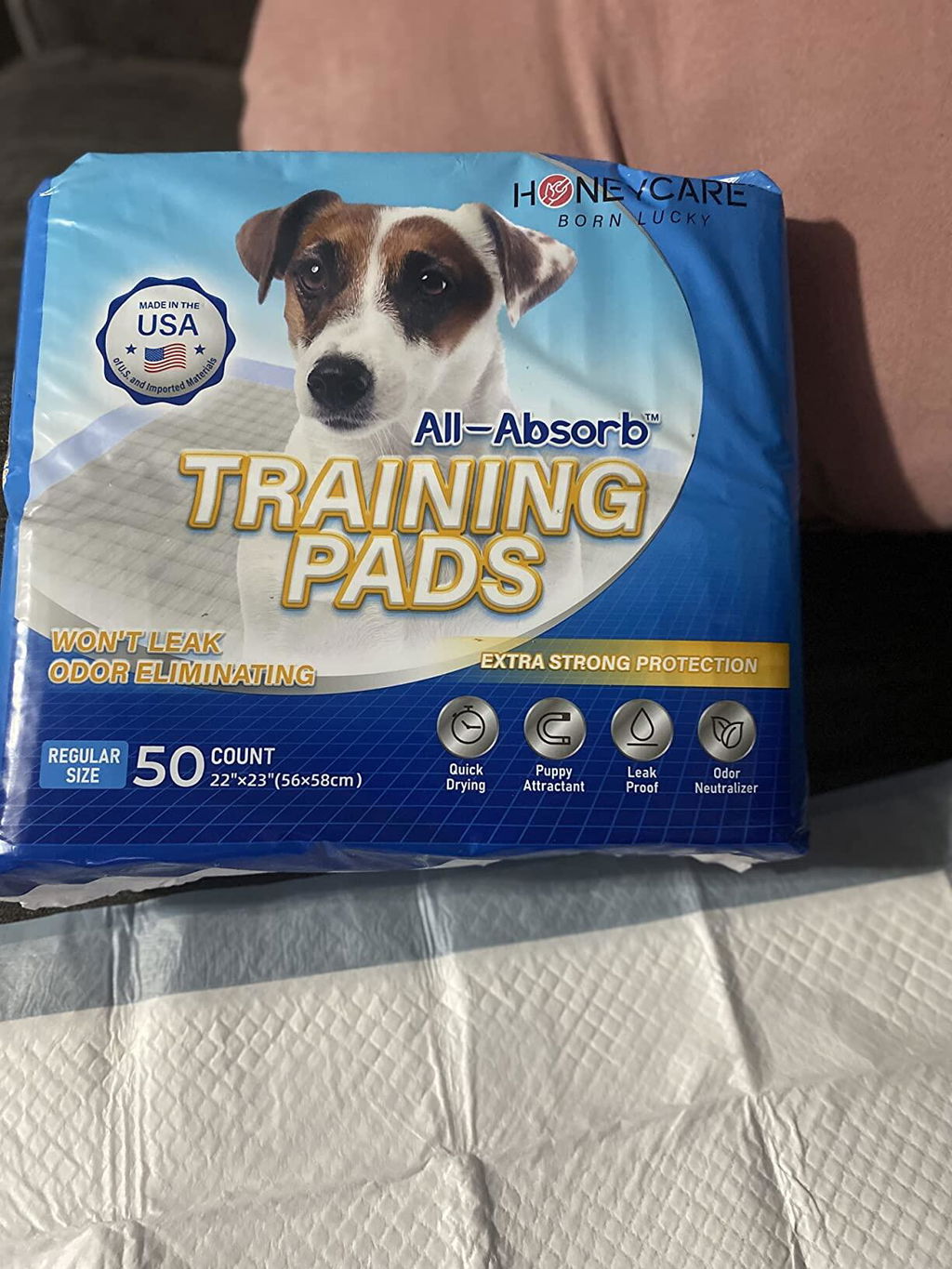
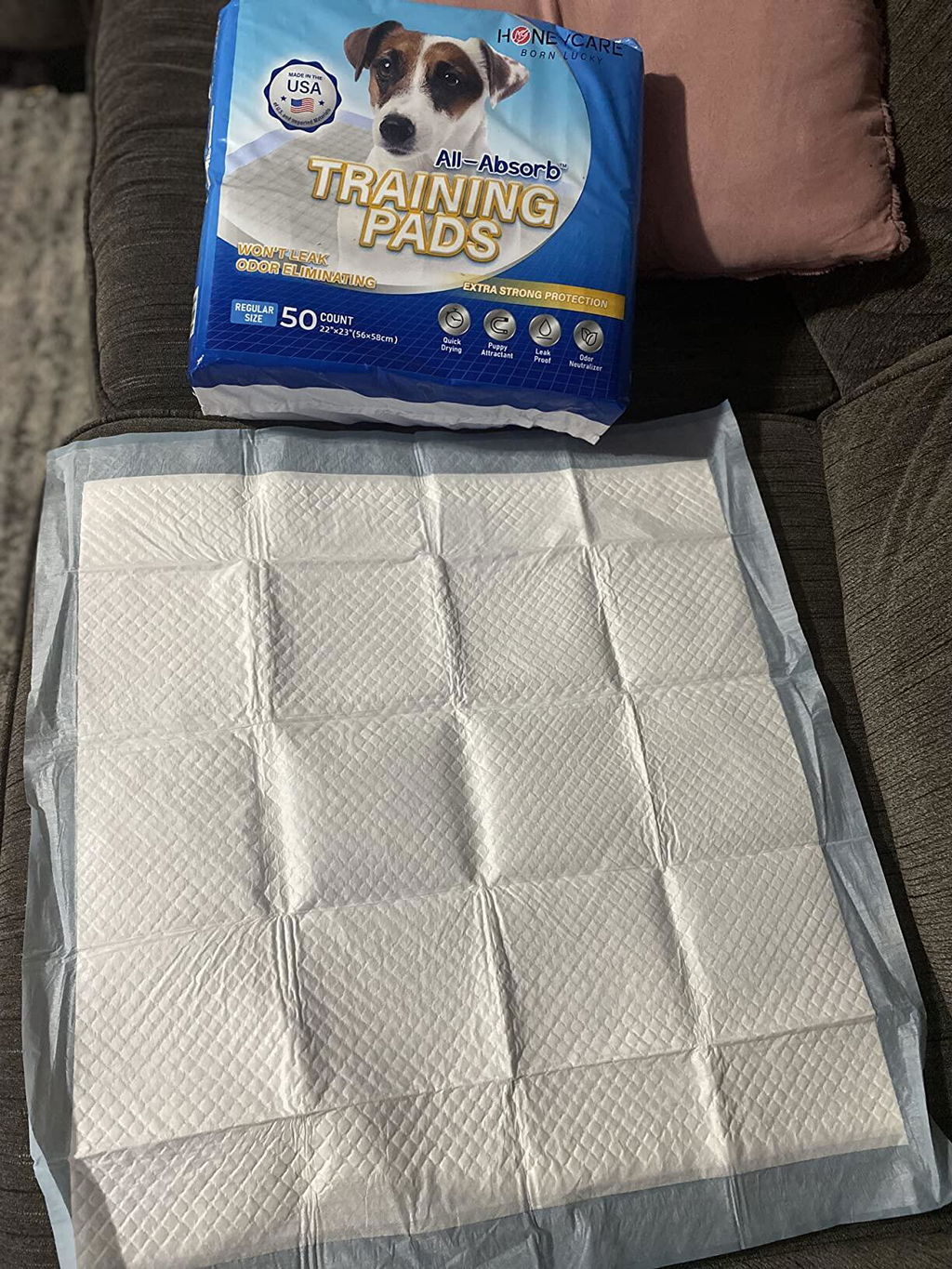
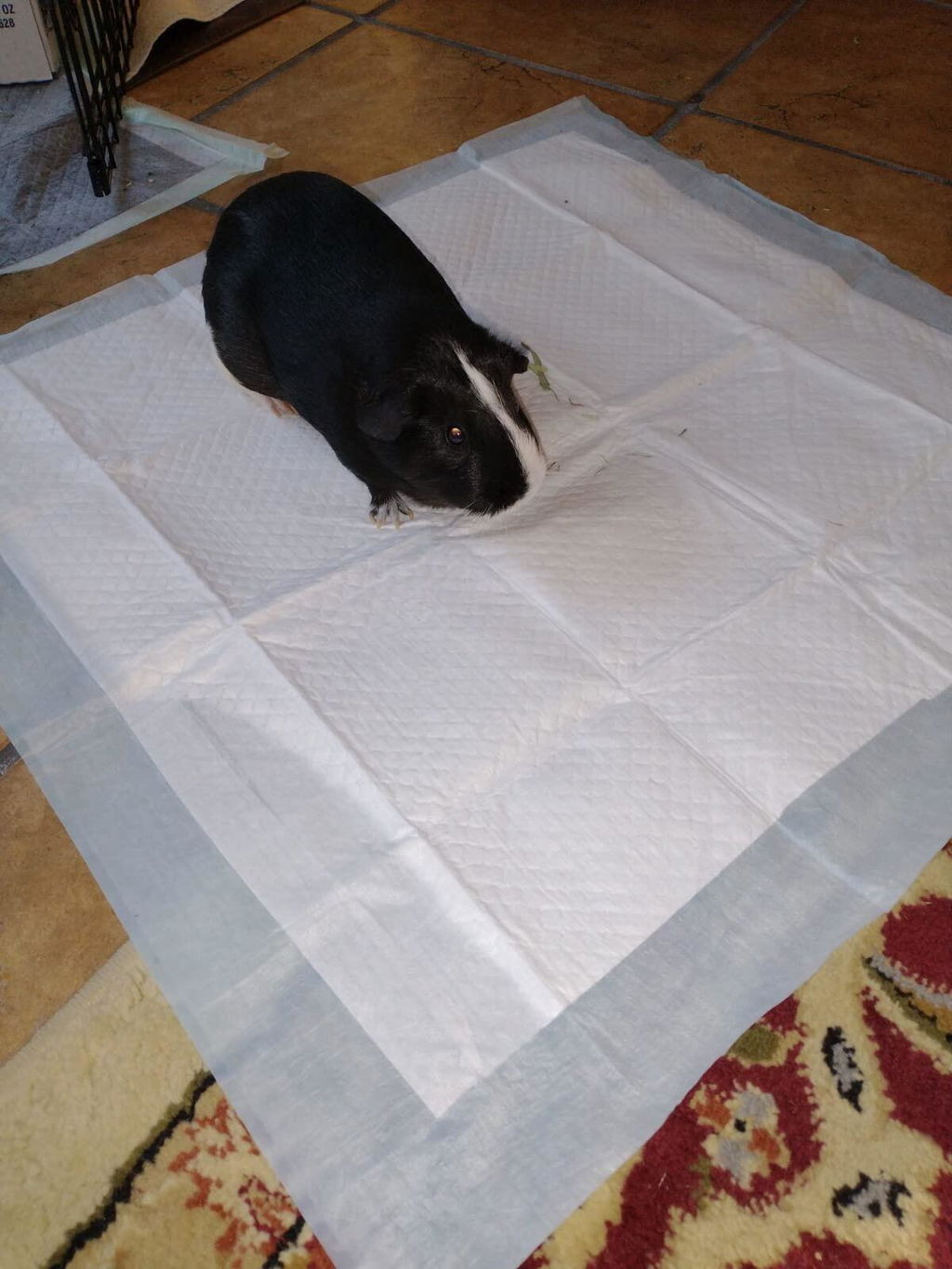
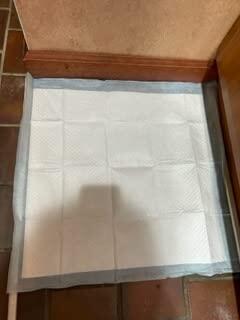
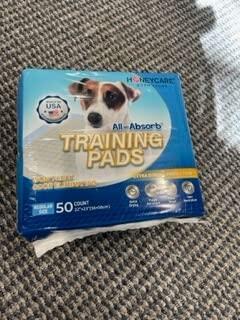
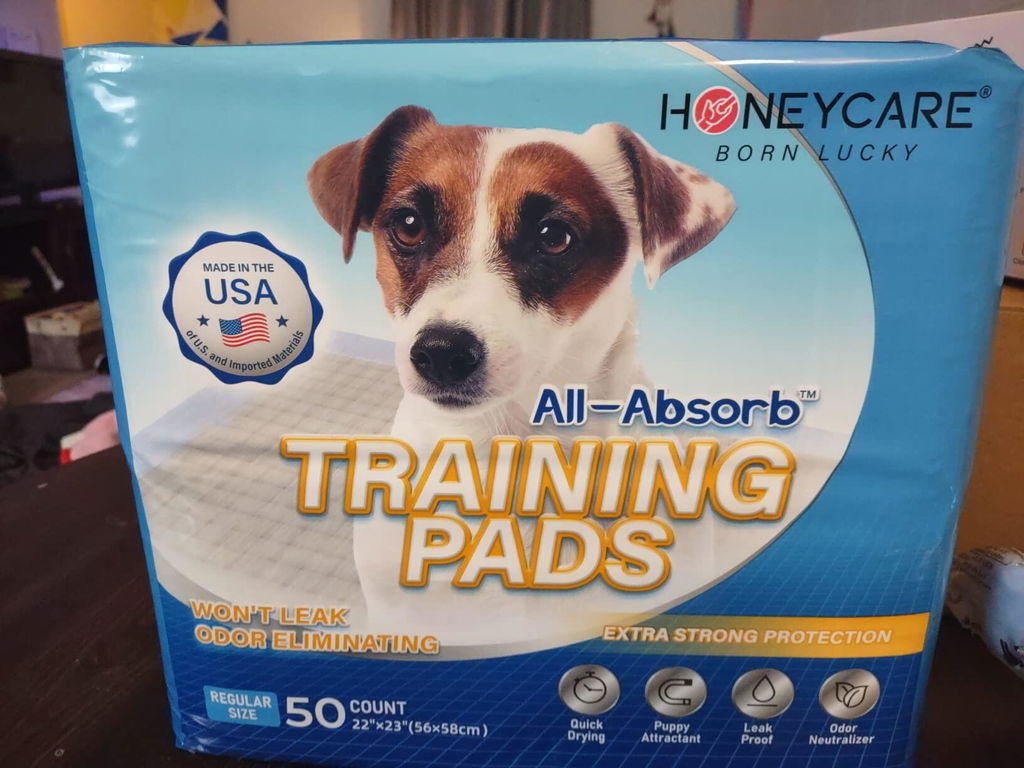
HoneyCare® Premium Training Pads are disposable indoor potty pads with 6-layer leak-proof construction: a quick-dry non-woven top sheet, two absorbent layers, a polymer gel core that locks urine into gel so it cannot squeeze back out, an absorbent locking layer, and a waterproof plastic backing. Adhesive tape on the corners holds the pad to the floor, which stops the 3am discovery of a pad kicked into the corner with a puddle where it used to be.
Use them for puppy potty training, apartments with no fast yard access, senior dogs who leak overnight, crate rest after surgery, travel, and any situation where your dog needs a fixed indoor spot they can reach in five seconds.
Who this is for
| Situation | Is this pad right? |
|---|---|
| Potty training a puppy who keeps missing the pad | YesThe pad is probably too small. S size at 480 pads per box gives you more changes per day without running out. |
| Apartment or high-rise where the elevator is too slow | YesOne fixed spot the dog can reach before an accident happens. |
| Senior dog leaking overnight or too stiff to go outside at 4am | YesPut the pad beside their bed. Arthritic dogs will not cross a room — they will just go where they are. |
| You work long shifts and come home to accidents | YesSize up rather than laying two pads side by side. Dogs aim for the middle of one target, not the seam between two. |
| Post-surgery crate rest or a dog on medication that makes them pee more | YesDry bedding matters around a healing incision. Change the pad more often than usual during recovery. |
| Hotel rooms, car trips, RVs, spare rooms | YesThe adhesive tape grips hard floors, so the pad will not slide when the dog circles. |
| Whelping boxes, grooming cages, or a litter of puppies | YesS size at 480 pads per box is the most cost-effective when you are changing pads multiple times a day. |
| Cats, rabbits, ferrets and other small pets | YesWorks as a litter-box liner or an under-cage layer. |
| Moving a dog from indoor pads to going outside | Check firstPads can slow the transition if kept indoors too long. See transitioning from pads to outside. |
| A dog who chews, shreds or eats the pad | Check firstSwallowed gel beads mean a vet visit. Read how to stop shredding before buying. |
| Containing urine on a dog who moves around the house | NoA pad only protects the floor it covers. For that, use a diaper or belly band. |
| Outdoor use on grass, gravel, a balcony drain or a dog run | NoThe waterproof backing needs a flat, dry floor to seal against. |
Size chart — four sizes, three different price points
Three of the four sizes on this page cost the same but ship very different pad counts, so choosing the wrong size changes your cost per pad by 3×. Measure the floor area you want protected nose-to-tail when your dog stands still, then pick the pad that covers it with at least 4 inches of margin on each side. Dogs drift toward the edge as they go, so a pad that only just fits will leak around the side.
Same price, very different quantities. S ships 480 pads (120 per pack × 4). Regular ships 400 pads (100 × 4). XL ships 160 pads (40 × 4). All three are $84.99. XXL ships 180 pads at $104.99 because it includes 6 packs instead of 4. If a small pad covers your dog, S is a third of the cost per pad compared to XL.
| Size | Pad dimensions | Pads per box | Which dogs this fits |
|---|---|---|---|
| S | 17.5 × 23.5 in44 × 60 cm | 480 pads120 per pack × 4 | Puppies under 15 lb, toy breeds — Chihuahua, Yorkie, Maltese, Toy Poodle, Pomeranian. Also the most cost-effective option for litters and any high-volume daily use. |
| Regular | 22 × 23 in56 × 58 cm | 400 pads100 per pack × 4 | Small breeds up to about 20 lb — Dachshund, Shih Tzu, Pug, Miniature Schnauzer, West Highland White Terrier, small terriers. Also right for litter-box liners. |
| XL | 28 × 34 in71 × 86 cm | 160 pads40 per pack × 4 | Medium and larger dogs roughly 20–60 lb — Beagle, Cocker Spaniel, French Bulldog, Border Collie, Australian Shepherd, Corgi, Bulldog. Also right for a growing large-breed puppy who has outgrown Regular. |
| XXL | 30 × 36 in76 × 91 cm | 180 pads30 per pack × 6 | Large and giant breeds over 60 lb — Labrador, Golden Retriever, German Shepherd, Husky, Boxer, Rottweiler, Great Dane, Mastiff. Also best for overnight coverage, a shared station for two dogs, or any dog who reaches the edge of an XL. |
Every size has the same 6-layer construction. Weight ranges are a starting point, not a rule — a long-bodied 25 lb Dachshund often needs more length than a compact 35 lb Frenchie. If your dog spins two or three circles before going, size up. Detailed guides: pee pad size chart · where to place the pad · how many pads per day · XXL pad guide
Frequently asked questions
My dog pees right next to the pad instead of on it. Why?
Nine times out of ten the pad is too small for him. Dogs start in the middle and drift toward the edge as they go — their back end usually ends up farther forward than where they started. If your dog's body length from nose to tail-base is longer than the pad, the back half of the stream will land off the pad even when he aimed correctly. Measure your dog standing still, then pick a pad that is at least 4 inches longer.
The other common reason is that the carpet or rug smells more like the right spot than the pad does. If he has peed on the carpet before, even months ago, that spot still smells like a bathroom to him. Clean it with an enzyme cleaner made for pet urine — regular cleaners do not break down the proteins dogs can smell. Then move the pad directly over that spot for a week before shifting it to where you actually want it.
What size pad does my dog need?
Measure your dog nose-to-tail-base when standing, then add 4–6 inches. That margin accounts for the fact that dogs drift forward as they go and often step onto the pad before they start. For example, a 20-inch-long Corgi needs at least a 24-inch pad, which means Regular (22×23 in) will be tight and XL (28×34 in) will work better.
If your dog circles two or three times before going, or if you are putting the pad in a spot where he cannot approach it straight-on, go up one size. Weight is a starting point but body length is what actually matters — a long-bodied 25 lb Dachshund needs more pad than a compact 35 lb French Bulldog.
Why are three sizes the same price but the pad counts are so different?
Because you are buying the box, not the pad, and material cost scales with size. S ships 480 pads at 17.5×23.5 in each, which works out to about 18¢ per pad. XL ships 160 pads at 28×34 in each — that is 53¢ per pad. XXL is a different price ($104.99) because it includes 6 packs instead of 4, bringing the total to 180 pads at 58¢ each.
If a small pad covers your dog, S is the lowest cost per pad by far. Choose XL or XXL when coverage is the thing that is failing you and quantity does not matter as much. The size chart above shows which dogs each size actually fits — do not pick based on price alone or you will end up with leaks around the edge.
How many pads will my puppy go through in a day?
At 8 weeks, expect 6–8 pads per day if you are changing the pad after every use. Puppies pee every 1–2 hours when awake. By 12 weeks that drops to 4–6 pads per day. By 16 weeks, 3–4 pads. By 6 months, most puppies are down to 2–3 pads per day if you are also taking them outside.
If you are leaving the same pad down for multiple uses, check it every 2–3 hours. The polymer gel locks liquid so the surface feels dry even when the pad is nearly full — that is what causes people to leave it too long. Replace the pad when it feels heavy or when you see the gel starting to bunch up. A pad left too long will eventually leak from the sides even though the top still looks dry.
How often should I change the pad?
For a puppy in training, change it after every use. Puppies go back to spots that smell like pee, and a used pad smells like pee, so leaving it down teaches them that peeing on a smelly pad is correct — which it is — but it also makes it harder to transition them to going outside later because the outdoor grass does not smell the same.
For an adult dog, senior dog, or a pad used overnight or while you are at work, change it when it feels heavy or when the gel starts to bunch up. That usually happens after 2–4 uses depending on the dog's size and how much they drink. Do not wait until the pad looks wet on top — the polymer core locks liquid into gel, so the surface can feel dry even when the pad is nearly full. A pad left too long will leak from the edges.
The pad slides around or my dog kicks it into a corner. What do I do?
Use the adhesive tape on the corners. Peel the backing off all four corner tabs and press the pad flat against the floor. The tape is strong enough to hold through a dog circling and scratching, but it works best on smooth floors like tile, vinyl, laminate or sealed hardwood. It will not grip well on carpet or textured stone.
If you are putting the pad on carpet or a rug, put a hard flat surface under it first — a piece of cardboard, a plastic chair mat, or a rigid tray. Tape the pad to that, then put the whole thing on the carpet. The weight and flatness will stop it from bunching up when the dog steps on it.
Will urine soak through to my hardwood floor?
Not if the pad stays flat and you change it before it is completely full. The waterproof backing seals against the floor when the pad lies flat, so liquid cannot pass through. The two failure modes are: the pad gets kicked up at the edges (fix: use the adhesive tape), or the pad is left down so long that it overfills and leaks from the sides (fix: change it when it feels heavy, not when it looks wet on top).
That said, if you have unsealed or damaged hardwood, any moisture that sits on it for hours can stain or warp the wood. If your floor finish is already compromised, put a waterproof mat or plastic tray under the pad as a second line of defense. For tile, vinyl or laminate you do not need to worry — those surfaces are waterproof.
How do I stop the pad from smelling up my apartment?
The pad itself does not smell much because the polymer gel locks liquid and most of the odor-causing bacteria inside the core. The smell is almost always coming from the trash can where you put the used pads. Urine-soaked pads sitting in an open bin for 2–3 days will absolutely smell.
Put used pads in a diaper pail with a locking lid, or in a small trash can lined with scented bags that you take out daily. If you do not want to take the trash out every day, roll the used pad tightly plastic-side-out and stuff it into a dog waste bag, knot it shut, and then throw it in the bin. That keeps the smell contained until trash day. The pad is the easiest part of the equation to control — the trash is where the smell actually lives.
My dog used the pad fine for months and suddenly stopped. What changed?
First rule out a urinary tract infection or other medical issue — sudden accidents after months of consistency is a common early sign. If your dog is also licking their genital area more than usual, straining, or peeing in small amounts more frequently, call your vet before assuming it is a behavior problem.
If health is not the issue, something in the environment changed. Common triggers: you moved the pad to a new spot and he has not found it yet, someone rearranged furniture and blocked his usual path to the pad, a loud noise scared him while he was on the pad once and now he avoids it, or another pet used the pad and now it smells wrong to him. Go back to basics — put the pad back where it was, clean any new accident spots with enzyme cleaner, and walk him to the pad on a schedule until the habit resets.
Can I put a pad in his crate?
You can, but it is not ideal for housetraining because it teaches the dog that peeing in the crate is acceptable. Crates work for housetraining because dogs instinctively avoid soiling their sleeping area — putting a pad in there removes that instinct. If your dog is crated for longer than he can physically hold it (puppies under 12 weeks can hold it about 2–3 hours max), the better solution is a larger pen with the crate inside it and the pad at the opposite end from the crate door.
That said, if you have a senior dog with incontinence, a dog recovering from surgery who cannot go outside, or a dog on medication that makes them pee more frequently, then yes — a pad in the crate keeps bedding dry and is the right call. Just know it will make outdoor training harder later if that is a goal.
Will using pads make it harder to train him to go outside later?
It can, but only if you leave the indoor pads available after you start outdoor training. The issue is that going outside takes effort — the dog has to signal, wait for you to notice, then walk to the door and go down stairs or across a yard. An indoor pad is five seconds away and always available. If both options exist, most dogs will pick the easier one.
The solution is to remove the indoor pad completely once outdoor training starts, not leave it as a backup. If you want to transition gradually, move the pad closer to the door over a week or two, then move it outside the door, then remove it entirely. Read transitioning from pads to outside for the full process. The pad itself is not the problem — leaving it available while also expecting the dog to go outside is the problem.
Are the gel beads safe if my dog chews the pad?
The gel beads themselves are non-toxic sodium polyacrylate, the same material used in baby diapers. If a dog swallows a small amount the gel will pass through their system without causing harm. But if a dog tears apart a pad and eats a large amount of the dry polymer beads, those beads will absorb liquid in the stomach and intestines and can cause a blockage. Symptoms include vomiting, loss of appetite, lethargy, or straining to defecate.
If your dog chews or eats pads, do not leave them unsupervised with one. Read how to stop shredding before buying. The usual causes are boredom, teething (for puppies), or the pad smells interesting because it is soaked. Switching to a diaper or belly band is often the safer solution for dogs who destroy pads.
Can two dogs share one pad?
Two small dogs can share an XL or XXL pad if you are changing it after every couple of uses. The polymer gel core in these pads can handle multiple uses before it is full — the issue is not capacity, it is territorial behavior. Some dogs will not use a pad that smells like another dog just peed on it. Others do not care.
If your dogs are fine sharing, go up one size from what one dog would need and change the pad more frequently than you would for a single dog. If one of them starts avoiding the pad or peeing next to it instead, that is a sign they want their own spot. In that case put down two separate pads in different areas rather than forcing them to share one.
Can I use these for a cat?
Yes — as a litter-box liner or an under-cage layer, not as a replacement for a litter box. Cats bury their waste, and a flat pad does not let them do that. If you put a pad in the bottom of a litter box and then add an inch or two of litter on top, the pad catches any liquid that seeps through and keeps the bottom of the box dry, which makes cleaning easier. It also prevents urine from soaking into plastic and causing the permanent smell that makes cats reject the box.
S size (17.5×23.5 in) fits most standard litter boxes. Change the liner when you dump the litter, which is usually once a week. Some people also use pads under rabbit cages, ferret cages, or guinea pig enclosures to catch drips and keep floors dry.
Do I need to buy anything else — a holder, a tray, a frame?
No, the pads work as-is on any flat floor. The adhesive tape on the corners holds the pad in place on tile, vinyl, laminate and sealed hardwood without needing a tray. If you are putting the pad on carpet or a textured surface where tape will not grip well, you can put a flat rigid surface under it (a piece of cardboard, a plastic chair mat, or a cheap vinyl placemat), but that is optional.
Pad holders and trays are sold as accessories but they are not necessary unless you specifically want a raised edge to prevent a pad from sliding on carpet, or you want something that looks more finished than a pad sitting on the floor. These pads are designed to work on their own — tape them down, and you are done.
Should I also buy diapers or belly bands, or will pads be enough?
If your dog only pees in one spot and you can predict when and where that will happen, pads are enough. If your dog leaks while walking around the house, sleeping on furniture, or riding in the car — or if the problem is marking on vertical surfaces like table legs and doorways — then a diaper or belly band is the better solution because it contains the urine no matter where the dog is.
Many people use both: a diaper or wrap when the dog is loose in the house or traveling, and a pad in one fixed spot for scheduled potty breaks. That gives you the best of both — the diaper prevents accidents anywhere in the house, and the pad gives the dog a designated place to go that you can direct them to on a schedule. You do not need to pick one or the other — they solve different problems.